An SEO package for a new website is the fastest way to get a fresh site indexed, structured and ready for Google and AI search in its first month. A monthly retainer suits sites with ongoing growth goals. DIY suits owners with time, patience and a small, simple site. This guide compares all three so you pick the right one for your situation.
I’m Arul M Joseph, a WordPress, Shopify and Laravel developer with 14+ years of experience and 500+ websites delivered through arulmjoseph.com. Most of those sites needed SEO decisions in their first weeks, and the right choice depended on the owner’s time, budget and goals.
Table of Contents
Quick Summary
- A one-time SEO package is a fixed-price set of SEO tasks delivered over a set period, usually 30 days. It fits new websites with no SEO foundation.
- A monthly SEO retainer is an ongoing service billed every month. It fits established sites competing for harder keywords.
- DIY SEO costs no money and takes your time. It fits small sites in low-competition niches with an owner willing to learn Google Search Console.
- For most new business websites, the practical path is a one-time package in month one, then DIY or a retainer from month two.
- Avoid any provider promising guaranteed rankings. Google’s own guidance warns against this.
| Model | Upfront cost | Ongoing cost | Time needed from you | Best suited for |
|---|---|---|---|---|
| One-time SEO launch package | One fixed payment (ours is ₹20,000) | None | Low: a short brief in week 1 | New websites, small business and portfolio sites, local services launching clean |
| Monthly SEO retainer | Little or none, sometimes a setup fee | A fee every month, often with a minimum term | Medium: monthly review calls | Competitive ecommerce stores, active blogs, funded startups |
| DIY SEO | Free with Google’s own tools; paid tools are optional | None, apart from any tools you choose | High: several hours every week | Solo founders on a tight budget who have time to learn |
Why Your SEO Choice Matters in Month One
The first month of a new website decides how fast search engines trust it. Google needs to crawl, index and understand your pages before any ranking happens.
A new site starts with no search history, no backlinks and no reviews. Mistakes made at launch, such as duplicate URLs, missing sitemaps or blocked pages, slow down indexing for weeks.
Fixing these issues early costs less than fixing them after Google has indexed the wrong versions of your pages. This is why the option you pick for month one matters more than the option you pick for month six.
Your Three Options for SEO on a New Website
You have three options: buy a one-time SEO package, sign a monthly SEO retainer, or do the work yourself. Each one trades money, time and speed in a different way. I’ll take them one at a time, then put them side by side.
Option 1: A One-Time SEO Package for a New Website
A one-time SEO package for a new website covers the foundation work every site needs once: technical setup, on-page optimization, local listings and AI search readiness. You pay a single fixed price and receive a defined list of deliverables.
A complete package for a new site in 2026 typically covers four tracks. Here is what I’d expect to see on the task list.
The Technical Setup
- Google Search Console and Bing Webmaster Tools setup
- XML sitemap creation and submission
- robots.txt review
- Redirects for www and non-www versions, HTTPS and trailing slashes
- Core Web Vitals and mobile fixes
- Canonical tags and duplicate URL fixes
- Schema markup, such as Organization, LocalBusiness, Service and FAQPage
Pages and Content
- Keyword research mapped to pages
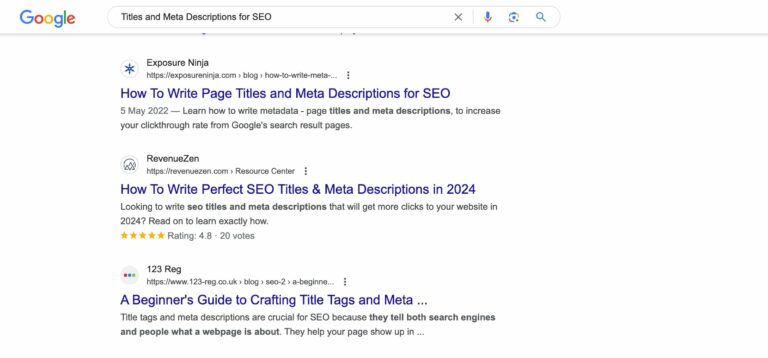
- Title tags and meta descriptions for key pages
- One H1 per page and a clear heading structure
- Internal links between service pages, blog posts and contact pages
AI Search: AEO, GEO and AIO
AI search optimization makes your site easy for tools like ChatGPT, Perplexity and Google AI Overviews to read, trust and quote. For a new site it comes down to four things.
- Structured data.
schema.orgmarkup such asOrganization,LocalBusiness,ServiceandFAQPage, so a machine reads your services, prices and contact details without guessing. - Answer-first paragraphs. Each section opens with a direct answer in its first sentence or two, and the detail follows. Question-and-answer blocks on key pages do the same job.
- An llms.txt file listing your important pages for AI tools.
- A consistent name, address and phone number (NAP) across your site, Google Business Profile and directories, plus brand mentions on other sites. AI tools cross-check these before they name a business.
Local Listings and Links
- Google Business Profile setup
- Business listings and citations
- A first set of relevant backlinks
Why the Code Comes First
Most SEO comparisons are written by marketers. I’m a developer, so here is the part they tend to skip: no amount of content or link building fixes a slow, badly built site.
If your theme loads dozens of plugins, ships oversized images and fails Core Web Vitals (the LCP and CLS scores in PageSpeed Insights), every later SEO task sits on a weak base. That is work done inside WordPress or Shopify itself: deferring scripts, serving modern image formats such as WebP, cleaning up redirects and removing what the page doesn’t need. It belongs in the launch month, not in month six of a retainer.
Our one-month SEO package for new websites covers all four tracks, starting with a full technical audit and fix list, for a fixed ₹20,000. It ends with a day-30 report.
Pros and Cons of an SEO Package
| Pros | Cons |
|---|---|
| Fixed price, no surprise costs | Covers setup, not months of content growth |
| Defined deliverables you check off | Results take longer than 30 days to show in rankings |
| Done by someone who has done it many times | You need a plan for month two |
| No long contract |
Option 2: A Monthly SEO Retainer
A monthly SEO retainer is an ongoing agreement where an agency or freelancer works on your SEO every month for a recurring fee. It focuses on growth over time: new content, link building, technical upkeep and reporting.
Retainers work well once a site has a solid foundation and competes for keywords with strong rivals.
The Retainer Trap for New Sites
For a brand-new site, a retainer often spends its first one or two months on the same setup tasks a package covers, at monthly pricing. I’ll say it plainly: paying a monthly fee for a five-page business site with no Search Console history is usually money spent too early.
A retainer earns its keep through iteration. Someone looks at which queries bring impressions, which pages sit on page two, and what to write or fix next. A site launched last week has none of that data yet. Fix the pipes once, let a few months of search data build up, then decide whether ongoing work is worth paying for.
What to Check in a Retainer Agreement
- The minimum contract term, often 3 to 12 months
- What gets done each month, in writing
- Who owns the accounts, content and backlinks if you leave
- How results get reported, and how often
Pros and Cons of a Monthly Retainer
| Pros | Cons |
|---|---|
| Continuous work on content and links | Recurring cost every month |
| Ongoing monitoring of rankings and technical issues | Setup work is often billed at retainer rates |
| Good for competitive keywords | Minimum terms lock you in |
Option 3: DIY SEO, and When It Actually Works
DIY SEO works when your site is small, your niche has low competition, and you have a few hours each week to learn. Google publishes free guidance for this path in its SEO Starter Guide.
The risk with DIY is technical mistakes you don’t notice. A noindex tag left on from development, or a sitemap listing the wrong URLs, keeps pages out of Google without any visible error on the site.
Free Tools That Cover Most of It
- Google Search Console for indexing, coverage and search queries
- PageSpeed Insights for Core Web Vitals
- Google’s Rich Results Test for schema markup
- Google Business Profile for local visibility
Pros and Cons of DIY SEO
| Pros | Cons |
|---|---|
| No cost beyond your time | Learning curve of several weeks |
| You understand your own site | Easy to miss technical errors |
| Full control | Slower progress while you learn |
SEO Package vs Retainer vs DIY, Side by Side
A one-time SEO package gives a new website the fastest complete foundation for a fixed cost. A retainer gives ongoing growth at a recurring cost. DIY gives full control at the cost of your time.
| Factor | One-time SEO package | Monthly SEO retainer | DIY SEO |
|---|---|---|---|
| Cost | One fixed payment | Recurring monthly fee | Free, plus your time |
| Time needed from you | About 1 hour in week 1 | Monthly review calls | Several hours every week |
| Technical setup | Done in week 1 | Often done in months 1 to 2 | Depends on your skills |
| AI search setup | Included in modern packages | Varies by agency | Rarely done |
| Contract | None | Often 3 to 12 months | None |
| Best for | New websites | Established, competitive sites | Small, low-competition sites |
| What you end with | Report, files and a next-step plan | Monthly reports | Whatever you finish |
Which Option Fits Your New Website?
Pick a one-time SEO package if your site is new and has no SEO foundation. Pick a retainer if your site already has a foundation and you compete for hard keywords. Pick DIY if your site is small and you have time to learn.
- Choose a package if your site is under 6 months old, you launched without Search Console, or your pages are not showing on Google.
- Choose a retainer if your site is over a year old, you publish content often, and your competitors invest in SEO every month.
- Choose DIY if your site has under 10 pages, you serve a small local area, and you enjoy learning tools.
- Choose a package followed by DIY if you want a correct setup once, then plan to manage content yourself.
In practice, most new sites I take on arrive with the same three gaps: no Search Console property, no submitted sitemap, and two live versions of every URL, one with www and one without. Fixing those three items in week 1 is often the difference between pages indexed in days and pages waiting for weeks.
How to Decide in Five Steps
Follow these five steps to decide in under an hour.
- Check your indexing. Search
site:yourdomain.comon Google. If few or no pages appear, you need setup work first. - List your goals for the next 3 months. Local enquiries, product sales or brand visibility each need a different focus.
- Count your available hours. Under 2 hours a week points away from DIY.
- Set a budget ceiling. Compare one fixed payment against 3 or more months of retainer fees.
- Ask each provider for a written task list. Compare what gets done, not what gets promised.
Common Mistakes to Avoid
The most common mistake is paying for ongoing SEO before the technical foundation is correct. Content and links bring little value if Google is not indexing your pages.
- Signing a 12-month retainer for a site launched last week
- Buying backlinks from link sellers, which breaks Google’s spam policies
- Trusting a provider who guarantees a number one ranking
- Leaving accounts like Search Console and Google Business Profile in the provider’s name
- Ignoring AI search, where tools like ChatGPT and Google AI Overviews now answer many local and service questions
Five Questions to Ask Before You Hire Anyone
Ask every provider these questions before you pay. Clear answers show a provider who plans their work.
- What exactly gets done in the first 30 days?
- Who owns the accounts, files and content after we stop working together?
- How do you report progress, and how often?
- Do you set up AI search items such as schema, llms.txt and FAQ content?
- Do you use paid links or private blog networks?
Google’s own page Do you need an SEO? lists similar questions and warns against providers who guarantee rankings.
FAQ
How much does an SEO package for a new website cost?
Prices vary by scope and provider. Our one-month SEO package for new websites costs a fixed ₹20,000 and covers technical, on-page, AI search and local SEO, with a report on day 30.
Is a monthly SEO retainer worth it for a new website?
A retainer is typically worth it after your site has a correct technical foundation. In the first month, a fixed package covers the same setup work at a lower total cost.
Is DIY SEO enough for a small business?
DIY SEO is enough for many small, local businesses with simple websites and an owner willing to learn Google Search Console. Sites with technical issues or strong competitors often need expert help.
How long until I see results from SEO on a new site?
Indexing typically takes days to a few weeks. First rankings for local and low-competition keywords often appear within 1 to 3 months. Competitive keywords take longer: Google’s own guidance says SEO work usually needs four months to a year to show its full benefit.
Do SEO packages include AI search optimization?
Modern packages often include AEO, GEO and AIO work such as schema markup, FAQ content and an llms.txt file. Ask each provider for the exact list.
What technical SEO items should never be skipped at launch?
Six items: a submitted XML sitemap, a correct robots.txt, canonical tags, 301 redirects so only one version of each URL is live, a mobile-friendly layout, and schema markup. Miss any of them and pages get indexed late, twice, or not at all.
Next Steps
- Check your site with a
site:search on Google today. - Set up Google Search Console if you have not done so.
- Read why your new website is not showing on Google yet.
- Compare options using the table above.
Want the launch setup done for you? See exactly what is included in our 30-day SEO launch package for new websites: a fixed ₹20,000, one payment, no contract. If you’re not sure it fits, book a free 30-minute consultation and I’ll look at your site and tell you what the first month would fix.